
Author: Site Editor Publish Time: 05-10-2026 Origin: Site
Retail buyers often fall into a common sourcing trap. They select knitwear based solely on the lowest per-unit cost. This approach frequently leads to high return rates, rapid pilling, and damaged brand equity. Customers notice when a sweater loses its shape after two washes. They stop buying from your brand. Retailers and boutique owners struggle to balance competitive pricing with physical durability. Modern menswear consumers demand "honest weight" and high perceived value. They want garments that drape well and resist wear. Achieving this requires moving beyond the basic factory quote. Successful knitwear sourcing requires evaluating fiber length, mill origins, construction techniques, and supplier reliability. You must understand how yarn tension and seam construction affect the final garment. This guide provides a practical framework for vetting a manufacturing partner. It will help you source knitwear that ensures long-term profitability and drives customer retention.
Unit Cost vs. Landed Cost: The lowest wholesale price often masks hidden costs in high defect rates, poor fit, and lost repeat business.
Construction & Sourcing Matter: Technical details like fiber staple length, specific wool mill origins, "honest" yarn weight, and fully fashioned knitting dictate a sweater's retail lifespan and pricing power.
Strategic Sourcing: Choosing between OEM men's sweaters and ready-to-ship stock depends entirely on your brand's required speed-to-market, MOQ capacity, and customization needs.
Retail Math & Fabric Levels: Sustainable knitwear programs rely on a minimum 2.5x–3x markup, which must be dynamically adjusted based on the fabric level (e.g., cotton vs. cashmere) and the physical garment's ability to justify the premium.
A successful sweater program relies on strict performance metrics. Low return rates indicate accurate sizing and quality construction. High sell-through rates at full retail price show strong market demand. The garment must retain its shape after washing. It should also hold strong secondary-market resale value. Sweaters that pill immediately or stretch out of proportion fail these criteria. They erode consumer trust and shrink your net profit margins. You cannot build a sustainable apparel business by selling disposable knitwear. The physical integrity of the garment must match the lifestyle demands of the end consumer.
Fiber staple length dictates durability. Short-staple fibers break easily under friction. This leads to immediate pilling and shedding around the underarms and waist. Long-staple fibers resist abrasion. They create a smoother, stronger yarn. When sourcing knitwear, ask about the micron count and staple length of the wool. Extra-fine merino wool typically measures around 19.5 microns, offering a soft hand-feel without sacrificing tensile strength. Coarser wools measure higher and feel scratchy against the skin.
Knowing where materials originate matters immensely. Highlighting specific, reputable wool mills elevates perceived value. Consumers trust established regional mills over anonymous yarn sources. Transparency in yarn sourcing allows you to command a higher retail price. If a factory cannot tell you where they buy their yarn, you assume the risk of inconsistent batches and undisclosed synthetic blends.
The concept of "honest weight" involves gauge and yarn density. Gauge refers to the number of stitches per inch on the knitting machine. A 3-gauge or 5-gauge sweater feels substantial and chunky, requiring thicker yarn. A 12-gauge or 14-gauge sweater feels sleek and refined, utilizing finer yarns. A heavier, well-draped sweater punches above its price point. It signals immediate quality to the consumer through hand-feel alone. Skimping on yarn density creates a flimsy garment that lacks structure. Factories often try to save money by knitting with fewer ends of yarn or loosening the tension. This results in a lightweight, transparent sweater that sags on the hanger.
Manufacturing methods directly impact garment lifespan. "Cut and sew" sweaters use serged seams. Factories knit large panels of fabric, cut out the pattern pieces, and sew them together using an overlock machine. This method is fast and cheap. However, it wastes yarn and creates bulky, rigid seams. Serged seams lack the natural elasticity of the knit fabric, leading to popped threads when the wearer stretches.
Fully fashioned sweaters use linked seams. Machines knit individual panels to the exact shape required, increasing or decreasing stitches to form armholes and necklines. Workers then attach these panels stitch by stitch using a dial linking machine. Linked seams provide superior stretch recovery. They lay flat against the body. They offer a cleaner finish inside the garment. You can identify a fully fashioned sweater by looking for fashion marks—small clusters of stitches near the armhole seams where the machine decreased the width. This labor-intensive process justifies a higher retail price point because the garment fits better and lasts longer.
Never commit to a bulk order based on a digital photo. You must request physical samples and subject them to rigorous testing. A proper evaluation requires more than just looking at the garment in a showroom.
Measure the chest, body length, and sleeve length of the unwashed sample.
Wash the garment according to the exact instructions on the proposed care label.
Lay the sweater flat to dry in a climate-controlled room.
Remeasure the garment to calculate the percentage of shrinkage or growth. Anything beyond a 3% variance indicates poor dimensional stability.
Evaluate colorfastness by checking the wash water for dye bleeding and inspecting the garment for fading.
Wear the sample for five consecutive days to measure shape retention at the elbows and monitor for early pilling under the arms.
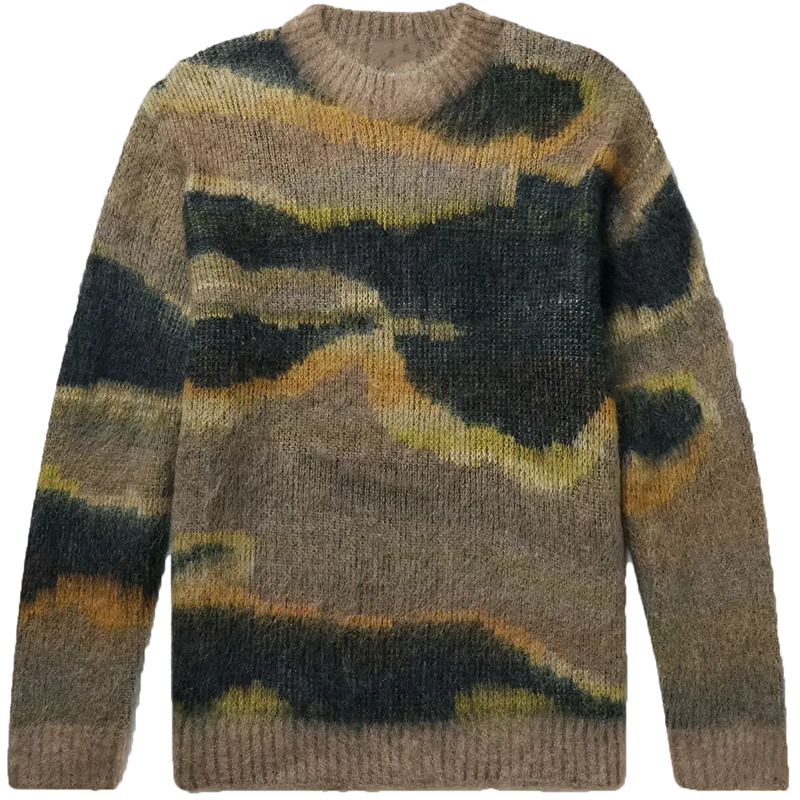
You have two primary avenues for sourcing knitwear. You can develop custom garments or buy existing inventory. Each approach serves different business models, cash flow requirements, and brand strategies. Selecting the wrong model ties up capital in unsellable inventory or leaves you out of stock during peak season.
Original Equipment Manufacturing fits brands that require complete control over the product. You provide custom tech packs, proprietary fits, and specific grading rules. You can request exclusive yarn blends, such as custom cashmere or extra-fine merino wool. This route builds a unique brand identity and prevents competitors from selling the exact same item.
However, sourcing OEM men's sweaters comes with strict trade-offs. Factories require higher Minimum Order Quantities (MOQs). You must typically order 300 to 500 units per colorway to justify the setup time on the knitting machines. Lead times are significantly longer, ranging from 60 to 120 days. You must also account for the time needed for rigorous prototyping, lab dips for color matching, and multiple sample revisions before bulk production begins.
Buying ready-made wholesale offers immediate inventory. This model suits boutiques and retailers who need to turn over stock quickly. You benefit from much lower MOQs, sometimes as low as 20 to 50 units. You can practice trend-responsive buying, adjusting your inventory based on mid-season sales data rather than forecasting six months in advance.
The trade-offs involve a lack of exclusivity. Other retailers will sell the exact same designs. Fits are standardized and may not align perfectly with your specific brand demographics. You also rely entirely on the supplier's quality control processes. When buying wholesale men's sweaters from stock, you cannot alter the yarn composition, the gauge, or the seam construction. You buy what is on the shelf.
Sourcing Model | Typical MOQ | Lead Time | Customization Level | Best For |
|---|---|---|---|---|
OEM Manufacturing | 300 - 500+ units/color | 60 - 120 days | High (Custom fit, yarn, tags) | Established brands, private labels |
Ready-to-Ship Wholesale | 20 - 50 units | 3 - 14 days | Low (Stock designs only) | Boutiques, trend-focused retailers |
Analyze which sweater silhouettes offer the most reliable return on investment. Look at historical menswear sell-through rates. Versatility drives sales. A garment that transitions easily from the office to the weekend holds higher value for the consumer. You must build a collection that covers different temperature ranges and social settings.
Position this style as the anchor of any knitwear line. The men's crewneck sweater offers unmatched versatility. Variations in fabric dictate its specific retail function. Classic mid-weight cotton crews knit in a 7-gauge or 12-gauge serve as durable, seasonal layering pieces. Cozy, premium cashmere crews function as high-margin, year-round staples. Pay attention to the collar ribbing. A tight, well-linked tubular collar prevents the neckline from sagging over time. Ensure the factory uses a high-quality spandex yarn in the ribbing to maintain elasticity.
Demand for smart casual office wear continues to rise. Quarter-zips and knit polos fill this gap perfectly. Hardware quality heavily impacts the overall garment lifespan. Specify heavy-duty zippers from reputable brands like YKK or Riri. Ensure buttons are securely reinforced with backing buttons to prevent tearing through the knit fabric. Tailored fits in the arms and chest improve professional versatility. These styles allow men to look polished without wearing a traditional blazer. A 12-gauge merino wool quarter-zip represents one of the most consistent sellers in modern menswear.
Utilize these styles for higher-margin, fashion-forward drops. Cardigans and turtlenecks have a slightly narrower target demographic than crewnecks. However, they carry a much higher perceived value. Heavyweight shawl-collar cardigans knit in a 3-gauge or 5-gauge can often replace light jackets, allowing for premium pricing. Ensure the button placket features a racking stitch to prevent stretching and distortion. Including these styles helps you build a complete, functional menswear wardrobe for your customers.
The technical quality of the garment dictates your financial realities. Cheap yarn limits your retail price ceiling. High-quality construction allows you to command premium prices. Understanding this relationship is critical for building a sustainable knitwear program. You cannot price a serged, short-staple cotton sweater like a fully fashioned merino wool piece.
Never base your retail math solely on the factory quote. You must calculate the final landed cost. Add ocean or air freight charges, import duties, customs brokerage fees, and packaging costs to the unit price. Knitwear often carries specific duty rates depending on the fiber content and country of origin. Include a 3% to 5% buffer for defective units. If a factory quotes a Free on Board (FOB) price of $18 per unit, your true landed cost might reach $24 after logistics and taxes. You must base your markup on the $24 figure to maintain healthy profit margins.
Standard boutique and e-commerce pricing models rely on a minimum 2.5x to 3x markup on the landed cost. You must adjust this baseline based on style and fabric level. For standard cotton blends, aim to maximize your margin percentage. For high-cost luxury fibers like cashmere or alpaca, you might accept a slightly lower margin percentage to achieve a higher gross dollar profit while keeping the retail price accessible.
Investing slightly more in production yields outsized retail returns. Spending $5 more on a higher-quality unit of men's knitwear wholesale can allow for a $20 to $30 increase in the final retail price. Improved hand-feel, better drape, and fully fashioned seams easily justify this premium to the consumer. The perceived value scales exponentially with minor upgrades in yarn quality and linking techniques.
Brands with high-quality construction often see excellent sell-through rates on resale platforms. Consumers recognize durability. High resale value builds long-term brand equity. It justifies your premium primary pricing. When customers know a sweater retains its value and survives multiple seasons, they hesitate less at checkout. Monitor resale sites to see how your garments hold up after a year of wear.
Audit potential manufacturing partners carefully before signing a purchase order or wiring a deposit. A concrete vetting checklist prevents costly production errors and delayed shipments. You must verify their technical capabilities, ethical standards, and quality control protocols.
Evaluate a factory's ability to understand complex specifications. Send them a detailed tech pack. This document should include a Bill of Materials (BOM), Points of Measure (POM), specific grading rules, and tension swatches. Assess how they handle gauge requirements and specific yarn sourcing requests. A reliable men's sweater supplier will ask clarifying questions. They will point out potential construction issues before prototyping begins. They will warn you if a requested yarn is too fragile for a specific gauge. Poor communication during the sampling phase guarantees disaster during bulk production.
Consumer demand for supply chain transparency grows every year. You must verify factory certifications. Look for the Responsible Wool Standard (RWS) for animal fibers to ensure humane shearing practices and land management. Check for Global Organic Textile Standard (GOTS) certification for cotton. Know exactly which mills your supplier partners with. A trustworthy men's sweater manufacturer will openly share their yarn sources and provide documentation. This transparency protects your brand reputation and provides excellent marketing material for your product descriptions.
Establish clear Acceptable Quality Limit (AQL) standards in your vendor agreement. The industry standard for apparel is often AQL 2.5 for major defects and 4.0 for minor defects. This defines the maximum number of defective units allowed in a batch before you reject the entire shipment. Utilize third-party inspection services for overseas production. Do not rely solely on the factory's internal QC team.
Verify garment measurements against the approved POM chart.
Check for visual defects like dropped stitches, uneven dyeing, or loose threads.
Test the stretch recovery of the collar and cuffs.
Weigh the garments to ensure the factory did not skimp on yarn density.
Inspect the packaging and labeling for compliance with customs regulations.
The physical quality of the yarn, fiber origin, and construction methods dictate your retail pricing ceiling and customer loyalty. Chasing the lowest unit price yields unsellable inventory and damages brand trust. You must narrow your supplier list based on transparent communication, verifiable fiber quality, and MOQ alignment. Execute the following steps to secure a reliable manufacturing partner:
Audit your current knitwear margins and recalculate true landed costs using updated freight and duty rates.
Draft a comprehensive tech pack that includes specific gauge requirements, tension swatches, and yarn micron counts.
Order physical samples from three separate factories to compare linking quality and seam stretch recovery.
Execute a rigorous wash-and-wear test on all prototypes to measure dimensional stability and pilling resistance before signing a purchase order.
A: The industry standard markup ranges from 2.5x to 3x the landed cost. You adjust this based on the fabric level. High-cost materials like cashmere take a slightly lower percentage markup to keep retail prices accessible. Standard cotton blends sustain higher margin percentages. Direct-to-consumer models allow for more flexible pricing than traditional retail.
A: Look for physical indicators like long staple length and a lack of immediate shedding. Check for honest yarn weight and density. The garment should not feel flimsy or overly loose. Ask for verifiable mill sourcing. Reputable manufacturers transparently disclose exactly where they purchase their raw wool or cotton.
A: OEM involves creating a completely new design from scratch based on your custom tech pack, specific fits, and chosen yarns. Private label involves taking a supplier's existing, ready-made stock design and attaching your brand's tag or logo to it. OEM offers exclusivity, while private label offers speed to market.
A: The crewneck and the quarter-zip consistently show the highest volume and sell-through rates. They perform well across various demographics due to their immense wardrobe versatility. They transition easily from casual weekend wear to smart-casual office environments, making them reliable investments for retail buyers.
A: Standard MOQs vary heavily by the sourcing model. For ready-to-ship stock or simple private label programs, expect realistic ranges of 50 to 100 units. For custom OEM production requiring specific yarn dyeing and custom knitting, expect MOQs of 300 to 500 units per colorway.


