
Author: Site Editor Publish Time: 30-04-2026 Origin: Site
Quality control in sweater production represents one of the most critical yet frequently underestimated aspects of the garment manufacturing supply chain. Unlike woven apparel, where fabric stability provides a relatively forgiving production canvas, knitwear's inherent elasticity and fibre-based construction make it susceptible to a wide range of quality variables that can compromise fit, appearance, durability, and consumer satisfaction. For brands sourcing women's sweater and men's sweater products from manufacturers like Spring River Knitting, understanding the quality control frameworks applied throughout the production process is essential for protecting brand reputation, minimising costly returns, and building long-term supplier relationships grounded in measurable performance standards.
The stakes are significant. Industry data indicates that knitwear accounts for a disproportionate share of garment returns in the retail sector, with dimensional instability, pilling, colour fading, and construction defects cited as the leading causes. Implementing robust quality control protocols at every stage of sweater production—not merely as an end-of-line inspection—can dramatically reduce these failure rates, improve customer satisfaction scores, and create a competitive differentiation that justifies premium pricing. This article examines the complete quality control ecosystem for sweater production, from raw material inspection through final garment evaluation, providing procurement professionals and product managers with a detailed operational reference.
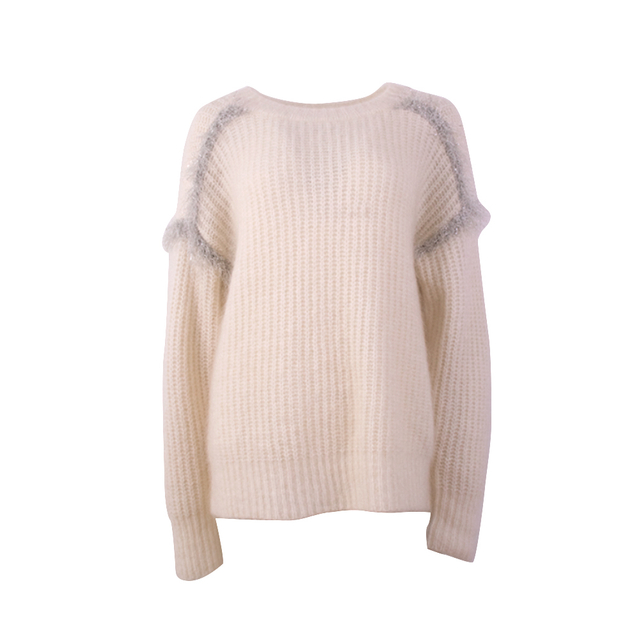
Quality control in sweater production is a systematic, multi-stage process designed to ensure that garments meet predetermined specifications for design integrity, construction quality, material performance, and consumer safety at every point from yarn receipt to finished garment shipment. Unlike simple pass-or-fail end inspections, modern quality management in knitwear manufacturing follows the philosophy that quality must be built into every production step rather than inspected in after the fact.
Effective quality control encompasses three interconnected dimensions: incoming quality control (IQC) for raw materials, in-process quality control (IPQC) during manufacturing operations, and outgoing quality control (OQC) or final inspection before shipment. Each dimension addresses specific risk factors and failure modes unique to the knitwear production process. The goal is to identify and correct deviations from specification at the earliest possible stage, when correction costs and production disruptions are minimised. Professional manufacturers implement statistical process control (SPC) techniques that track quality performance across production runs, enabling proactive identification of process drift before it generates defective output.
Understanding which parameters matter most helps buyers communicate their quality expectations clearly and evaluate manufacturer capabilities accurately.
Knitted fabrics respond to washing, steaming, and wearing in ways that woven fabrics do not. The interlocking stitch structure that gives knitwear its characteristic elasticity also makes it susceptible to dimensional change when exposed to moisture and heat. Quality-conscious manufacturers address this through controlled knitting tension, appropriate yarn twist levels, pre-shrinking finishing treatments, and dimensional stability testing conducted on sample garments through multiple wash cycles. The relationship between yarn twist, knitting tension, and finishing treatment must be carefully balanced—over-stabilisation can make garments feel stiff and unnatural, while under-stabilisation leads to consumer disappointments.
Stitch uniformity—the evenness of loop size and shape across the garment surface—is a primary visual indicator of sweater quality. Variations in stitch density can arise from incorrect machine tension settings, uneven yarn thickness, or worn machine components. Gauge consistency ensures that the knitted fabric matches the technical specification and produces garments of the intended size and fit. Professional factories conduct stitch density measurements at regular intervals during production runs, adjusting machine parameters as needed to maintain specification compliance. This ongoing calibration process distinguishes professional manufacturing from budget production where machine settings are established at the start of a run and rarely revisited.
Seams are the structural weak points in any assembled garment. In knitwear, the linking process joins individual panels using specialised seaming stitches that must balance strength with comfort and appearance. Poorly linked seams can unravel, gap, or create uncomfortable ridges against the skin. Quality factories perform seam elasticity and strength tests on linked samples, verifying that seam performance meets or exceeds the garment's expected service demands. The hand-linking technique, where skilled operators join panels using a fine chain-stitch, produces the smoothest, most comfortable seams and is considered essential for premium-quality knitwear.
Colour fastness—the resistance of dyed yarn or fabric to fading, bleeding, or transferring colour to other surfaces—directly affects garment longevity and consumer satisfaction. Colour consistency across garment panels, within production batches, and between repeat orders ensures brand consistency and prevents mismatched garments from reaching consumers. Professional manufacturers conduct standardised colour fastness tests including wash fastness, light fastness, rub fastness, and perspiration fastness. The cost of a colour-related return—a garment that bleeds onto other clothing or fades after a single wash—far exceeds the cost of comprehensive colour testing at the production stage.
Pilling—the formation of small fibre balls on the fabric surface—is one of the most common consumer complaints with knitwear, particularly with wool and wool-blend fibres. While pilling cannot be completely eliminated in natural fibre knitwear, professional manufacturers apply anti-pilling finishes and select yarn constructions that minimise pilling propensity. Pilling tests conducted under standardised abrasion conditions allow manufacturers to evaluate and compare yarn and finishing options objectively. The JIS L 1076 and ASTM D4970 pilling tests provide industry-standard methodologies for evaluating and communicating fabric pilling performance.
Technological advancement is transforming quality control practices in the knitwear manufacturing sector, enabling more precise, efficient, and comprehensive inspection protocols.
Advanced optical scanning systems installed on knitting machines can detect stitch irregularities, dropped stitches, and yarn faults in real time, alerting operators to problems before defective fabric accumulates. These systems provide objective, continuous monitoring that complements human inspection, reducing the reliance on end-of-shift visual checks alone. Computer vision technology has advanced to the point where automated inspection systems can identify defects at resolution levels that exceed human visual detection capabilities, particularly for subtle issues that might be missed during extended inspection shifts.
Three-dimensional body scanning technology and digital garment measurement systems enable precise comparison of finished garment dimensions against specification charts. Automated fitting analysis software identifies areas of over or under-measurement, enabling rapid corrective action in the production process. This technology is particularly valuable for brands producing fitted women's sweater styles where precise sizing is essential for consumer satisfaction. Digital measurement eliminates the subjectivity and inconsistency inherent in manual measurement, providing objective, reproducible data that supports both quality control and design development processes.
Modern quality management systems collect inspection data at every checkpoint, generating statistical process control (SPC) charts that track quality performance over time. These data streams enable factory quality managers to identify emerging trends, shift-specific performance variations, and machine-specific quality patterns that might not be apparent from individual inspection records. For brand quality managers reviewing supplier performance, SPC data provides an objective basis for performance conversations and continuous improvement planning. The ability to trend quality data across seasons also enables buyers to evaluate supplier consistency and identify long-term performance patterns that single-order inspections cannot reveal.
Different market segments and product categories require tailored quality control approaches that align with consumer expectations and price positioning.
Luxury sweater production demands the highest quality standards across all parameters. Hand-linked seams, fine-gauge knitting, rare fibre content, and complex stitch patterns require inspection protocols that verify not only mechanical performance but also the aesthetic qualities that define luxury positioning. Premium factories serving this segment typically maintain quality defect rates below 0.5% using AQL 1.0 inspection standards. Every aspect of the garment—from the uniformity of individual stitches to the precision of pattern placement and the quality of finishing—is scrutinised to standards that would be economically impractical for mass-market production but are essential for maintaining luxury brand positioning.
High-volume sweater production serving fast-fashion retailers prioritises efficiency alongside quality, accepting somewhat broader tolerance ranges in exchange for competitive pricing. Quality control in this segment focuses on the parameters most likely to generate consumer complaints and returns—dimensional stability, colour consistency, and basic construction integrity—using AQL 2.5 or 4.0 standards depending on the retailer's quality policy. The challenge for mass-market quality control is maintaining adequate quality within the cost constraints that characterise this segment, requiring disciplined focus on the most impactful quality parameters.
Performance knitwear serving outdoor, athletic, and workwear applications requires additional quality verification for functional attributes including moisture management, thermal regulation, abrasion resistance, and odour control. These parameters may require specialised testing equipment and protocols beyond standard garment inspection procedures. Functional performance testing should be conducted on production samples from each colourway and yarn lot, not merely on development samples, to verify that functional performance is maintained across actual production conditions.
Specification | Spring River Knitting | Competitor A (Mid-Market) | Competitor B (Budget Supplier) | Industry Average |
|---|---|---|---|---|
Quality Inspection Checkpoints | 8 stages | 4 stages | 2 stages | 4 stages |
AQL Standard Used | AQL 1.0–1.5 | AQL 2.5 | AQL 4.0 | AQL 2.5 |
Incoming Yarn Inspection | Full batch testing | Random sampling | Limited | Partial |
In-Process Monitoring | Real-time + manual | Periodic manual | End-of-run only | Periodic |
Dimensional Stability Testing | Multiple wash cycles | Single wash | Basic | Single wash |
Colour Fastness Testing | Full suite (6 tests) | 3 tests | 1 test | 3 tests |
Pilling Resistance Testing | Yes, standardised | Limited | No | Partial |
Quality Reporting to Buyer | Detailed with photos | Summary report | Basic | Summary |
Defect Rejection Rate Target | <1% | <3% | <6% | <3% |
Certified QC Personnel | Yes, trained and certified | Trained | Variable | Trained |
Traceability System | Full lot traceability | Batch traceability | Limited | Partial |
After-Sales Quality Support | Responsive, data-driven | Limited | Minimal | Limited |
Automation is redefining inspection efficiency. Artificial intelligence and machine vision systems are increasingly deployed in knitwear quality inspection, enabling detection of defects that human inspectors might miss during long shifts. AI-based inspection can process fabric at production line speeds while maintaining consistent detection sensitivity, reducing both labour costs and inspection variability. Early adopters of AI inspection technology report significant reductions in quality escape rates—the frequency of defective garments reaching the consumer.
Consumer expectations for transparency are rising. Brands are under increasing pressure to share quality data, testing results, and supply chain information with consumers. QR codes on garment labels linking to quality certification records and production documentation are becoming more common, particularly in European and North American markets. This transparency expectation extends quality accountability beyond the factory floor into the consumer-facing aspects of brand communication.
Sustainability and quality are converging. The relationship between product durability and environmental impact is driving renewed attention to quality standards. Longer-lasting knitwear reduces replacement frequency, decreasing overall textile waste. Quality protocols that identify and reject garments likely to fail prematurely serve both commercial and environmental objectives. Brands are beginning to quantify the environmental return on quality investment, building compelling business cases for enhanced quality control expenditure.
Digital twins and simulation are improving design quality. Virtual garment simulation tools allow designers and quality engineers to evaluate fit, drape, and stress points before physical samples are produced. This capability reduces the number of prototype iterations needed to achieve a production-ready design, shortening development timelines and reducing material waste associated with sample production.
For buyers establishing or reviewing their knitwear sourcing relationships, the following framework provides a structured approach to quality control evaluation.
Request documentation of the factory's quality management system, including quality manuals, inspection procedures, employee training records, and relevant certifications such as ISO 9001. Ask specifically about how quality responsibilities are assigned and whether quality personnel have direct reporting authority to factory management, independent of production targets. Quality systems where inspectors report through production management face inherent conflicts of interest that can compromise inspection integrity.
Provide the manufacturer with a detailed quality specification document that covers all relevant parameters including construction standards, measurement tolerances, performance test requirements, labelling accuracy, and packaging specifications. The more precisely you define quality expectations, the more objectively performance can be evaluated. Ambiguous or incomplete specifications are a leading cause of quality disputes, as they create space for interpretation that favours the manufacturer's interests rather than the buyer's.
Establish mutually acceptable AQL levels for different defect categories (critical, major, minor) and specify the inspection sampling plan to be used. Agree on how inspection results will be documented, shared, and used to trigger corrective actions. Standard AQL levels for knitwear range from AQL 1.0 for premium products to AQL 4.0 for basic mass-market garments. Always specify different AQL levels for critical, major, and minor defect categories rather than applying a single standard across all defect types.
Always arrange independent pre-shipment inspection for orders above a defined value threshold. Third-party inspection services provide an objective assessment of shipment quality against agreed specifications and help identify quality issues before goods arrive at your distribution centre. Establish clear protocols for handling inspection failures, including re-inspection procedures, rework requirements, and claim resolution processes. Pre-shipment inspection is an insurance policy—its value is realised only when it catches problems before they reach the consumer.
Request periodic quality performance summaries from your supplier, including defect rate trends, customer complaint data, and corrective action effectiveness. Regular quality performance reviews create accountability and identify systemic issues that might otherwise accumulate undetected across multiple production runs. The most effective buyer-manufacturer relationships treat quality performance data as a shared resource for continuous improvement rather than a basis for punitive responses to individual failures.
Building quality into your sourcing strategy yields benefits that extend far beyond individual order performance.
The true cost of quality encompasses not only the direct costs of inspection, testing, and rework but also the hidden costs of customer returns, brand damage, and lost sales that arise from quality failures. Brands that invest in stronger incoming quality control and in-process monitoring often discover that total quality costs decrease even as direct quality spending increases, because failure costs decline more than proportionally. Calculating total cost of quality requires tracking all quality-related costs across the product lifecycle, including those incurred after the point of sale.
Working with suppliers on continuous quality improvement rather than simply penalising defects creates a partnership dynamic that benefits both parties. Joint root cause analysis of quality issues, shared investment in process improvements, and recognition of supplier quality achievements all strengthen the buyer-supplier relationship and drive sustained quality performance gains. The most successful quality improvement programmes are co-owned by buyers and manufacturers, combining buyer insight into consumer requirements with manufacturer expertise in production process optimisation.
Quality control requirements should match the brand's market positioning. A premium brand investing in detailed hand-finishing and rare fibre content cannot afford to accept quality standards appropriate for budget fast-fashion production. Conversely, over-specifying quality requirements for basic everyday sweater lines inflates costs unnecessarily and may create supplier relationship tensions when those standards prove unachievable at the target price point. Calibrating quality investment to brand positioning maximises value creation across the product range.
What AQL standard should I require for sweater production?
The appropriate AQL level depends on your market segment and brand positioning. Premium and luxury sweater brands typically require AQL 1.0 to 1.5, accepting only the most minimal defect rates. Mid-market brands commonly specify AQL 2.5, which represents approximately 2.5 defective units per 100 inspected. Entry-level or fast-fashion sweaters may accept AQL 4.0, though this carries a higher consumer complaint risk.
How is dimensional stability tested in sweater production?
Dimensional stability testing involves washing or dry-cleaning a finished garment according to the care label instructions and measuring changes in key dimensions including body length, chest width, sleeve length, and overall weight. Industry-standard test methods include ISO 6330 (domestic washing), ISO 5077 (dimensional change measurement), and ASTM F1868 (thermal manikin testing for performance garments). Professional manufacturers conduct this testing on multiple wash cycles to evaluate long-term dimensional performance.
What are critical defects versus minor defects in sweater quality inspection?
Critical defects are flaws that render the garment unsafe or illegal for use, such as broken needles left inside the garment, incorrect fire-retardant labelling on children's sleepwear, or hazardous chemical levels exceeding regulatory limits. Major defects significantly impair the garment's appearance, fit, or functionality in ways that a reasonable consumer would notice and reject, such as mismatched colour across panels or unseated seams. Minor defects are slight deviations from specification unlikely to be noticed by most consumers.
How does yarn quality affect final sweater quality?
Yarn quality is the foundation of sweater quality. Yarn irregularities including thick and thin places, slubs, nepps, and inconsistent twist levels directly manifest as fabric defects in the knitted garment. Yarn strength and elongation affect both knitting performance and finished garment durability. Fibre content and yarn construction determine the fabric's hand-feel, pilling propensity, colour fastness, and dimensional behaviour.
What role does fitting and size validation play in sweater quality control?
Fitting validation ensures that the finished garment drapes, shapes, and sizes as intended when worn by the target consumer body type. Poor fit is one of the leading causes of sweater returns and consumer dissatisfaction. Professional manufacturers create graded sample garments in all sizes, fitting them on live models or body forms representing the target market's sizing profile, and adjusting patterns to achieve consistent fit across the complete size range.
What documentation should I require from a sweater manufacturer regarding quality?
Essential quality documentation includes pre-production lab test reports for the yarn and fabric, in-line inspection reports during production, finished garment inspection reports with AQL sampling results, dimensional measurement records, colour fastness test certificates, care label accuracy verification, and packaging and labelling compliance confirmation.
How can I reduce pilling in my sweater products?
Reducing pilling involves a combination of yarn selection, fabric construction choices, and finishing treatments. High-twist yarns and filament fibres resist pilling better than low-twist staple fibre yarns. Using longer-staple fibres and ring-spun yarn constructions produces smoother, more uniform yarns that pill less readily. Anti-pilling finishes chemically treat the fabric surface to reduce fibre tangling. Professional manufacturers can advise on optimal combinations for your target price point and performance requirements.
Quality control in sweater production is far more than a final inspection step—it is a comprehensive, factory-wide commitment to maintaining standards at every stage of the manufacturing process. From the moment yarn enters the production facility through the final check before shipment, each operation presents opportunities to either build quality into the garment or allow defects to propagate to the consumer. For brands sourcing women's sweater and men's sweater products, understanding these quality dynamics, setting clear specifications, and partnering with manufacturers who invest in robust quality management systems are essential strategies for long-term commercial success.
The knitwear brands that consistently deliver superior quality to their customers are those that treat quality control not as a cost centre but as a competitive investment. By establishing transparent quality standards, demanding comprehensive inspection protocols, and building collaborative relationships with suppliers who share their commitment to excellence, buyers can create supply chain foundations that support sustainable brand growth and consumer loyalty. In an industry where product failure generates both direct financial losses and lasting reputational damage, quality leadership is not optional—it is the prerequisite for market relevance and enduring success.


