
Author: Site Editor Publish Time: 01-09-2026 Origin: Site
The difference between a high-margin sell-through and discounted deadstock often hinges on micro-details in knit construction and yarn selection. When merchandising winter sweaters, buyers face a constant tension. You must balance trend-aligned aesthetics with strict manufacturing realities. Unit economics, durability, and warmth dictate the final product's viability on the rack. Designing a visually appealing garment is only the first step. Executing that design at scale requires precise technical specifications.
We evaluate sweater details from yarn composition and knit gauge to seam construction and factory capabilities. By understanding these mechanical variables, buyers and merchandisers can build profitable, high-quality collections. You will learn how to specify construction methods that prevent garment distortion, select yarns that resist pilling, and align design ambitions with factory limitations.
Material dictates baseline performance: Yarn composition (pure wool vs. strategic blends) establishes the fundamental warmth-to-weight ratio and dictates long-term wearability (pilling resistance).
Structural details drive perceived value: Specific construction choices in necklines, cuffs, and linking techniques directly influence shape retention and consumer satisfaction.
Gauge and tension require technical alignment: Heavyweight knits demand precise tension management to avoid garment distortion, excessive material costs, and layering friction.
Manufacturer capabilities limit design execution: Partnering with a specialized OEM sweater manufacturer is critical for scaling intricate details without compromising quality control or lead times.
Cold-weather knits must meet three primary functional requirements. They need insulation, breathability, and outerwear compatibility. Insulation relies on the yarn's ability to trap warm air close to the body. This is measured by the thermal resistance of the knit structure. Breathability ensures moisture vapor escapes when the wearer transitions indoors. Natural fibers excel here, as wool can absorb up to 30% of its weight in moisture without feeling wet against the skin. Outerwear compatibility dictates the physical bulk of the garment. If a sweater features excessively wide sleeves or rigid seams, it bunches uncomfortably under heavy jackets. Seamless layering requires smooth armhole transitions, pliable fabrics, and appropriate gauge selection.
A successful women's winter sweater functions as a high-frequency everyday staple. It must transition seamlessly from late fall through deep winter. This requires a versatile silhouette engineered for movement. Drop shoulders offer a relaxed fit but require careful tension management at the armhole seam to avoid looking sloppy. Ribbed hems must sit flat against the hips without riding up during movement. The workhorse garment prioritizes structural integrity over fleeting trends. Consumers expect these pieces to withstand weekly washing and wearing cycles without losing their original shape. Achieving this requires specifying stable stitch structures, such as a Milano rib or a tightly tensioned jersey knit, which resist vertical stretching.
Evaluate yarn density against overall garment weight. Heavy does not always mean warm. Loft provides insulation. Air trapped within the fiber structure retains body heat. Dense, tightly spun yarns add physical weight but often conduct cold if they lack loft. Excessive weight causes wearer fatigue and drives up shipping costs per unit. Specify woolen-spun yarns for higher loft and lower weight. Woolen spinning traps more air between the fibers. Use worsted-spun yarns when you need smooth textures and high stitch definition, accepting the slight increase in weight. You must also calculate the metric yarn count (Nm). Feeding two ends of 2/28Nm yarn on a 12-gauge machine yields a vastly different warmth-to-weight ratio than feeding four ends on a 7-gauge machine.
Assess long-term quality using specific testing metrics. Focus on tensile strength, colorfastness, and abrasion resistance. High-friction areas demand special attention. Elbows, underarms, and side seams experience constant rubbing. Weak yarns break down quickly here. Request Martindale abrasion test results from your suppliers, aiming for a minimum of 10,000 rubs for standard knitwear. Colorfastness ensures dark dyes do not bleed onto lighter layers. Specify ISO 105-C06 for washing and ISO 105-X12 for rubbing. Tensile strength prevents the garment from snapping under physical stress. Set clear baseline standards for pilling resistance before approving any pre-production samples, utilizing the ICI pilling box test to simulate real-world wear.
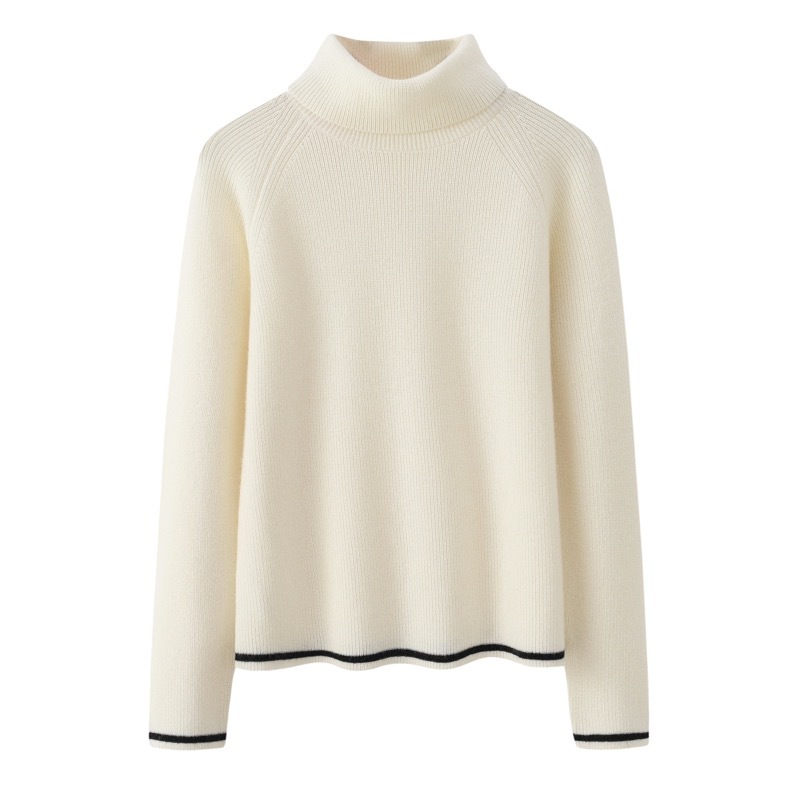
Yarn composition dictates the physical properties of the final garment. Pure natural fibers offer distinct advantages. Merino wool provides excellent temperature regulation and moisture wicking. Specify 19.5-micron extra-fine merino for garments worn directly against the skin to prevent itching. Cashmere delivers an ultra-soft hand-feel for luxury positioning, requiring a staple length of at least 34mm to prevent excessive shedding. Alpaca adds significant warmth without adding weight, while mohair creates a popular textural halo effect. However, natural fibers often require synthetic additions for structural stability. Adding nylon or acrylic to a wool sweater improves shape retention. Strategic blends lower raw material costs while maintaining the visual appeal of natural fibers.
Fiber Type | Primary Benefit | Common Blends | Ideal Application |
|---|---|---|---|
Extra-Fine Merino (19.5μ) | Softness, temperature regulation | 10-20% Nylon for strength | Base layers, fine-gauge pullovers |
Cashmere | Premium hand-feel, high insulation | Silk or fine Merino | Luxury cardigans, high-margin items |
Alpaca | High warmth-to-weight ratio | Acrylic, Wool, Nylon | Chunky knits, textured outerwear |
Mohair | Visual texture (halo effect) | Silk, Nylon | Statement pieces, fashion silhouettes |
Pilling is an inevitable mechanical process in knitwear. It occurs when short fibers migrate to the fabric surface and tangle into small balls. Staple length and yarn twist dictate the severity of pilling. Short staple fibers pill faster than long staple fibers. Loose twists allow fibers to escape easily. To mitigate this, specify longer staple lengths in your tech packs. Request high-twist spinning techniques for everyday wear items. While high-twist yarns reduce pilling, they can make the hand-feel harsher. You can counteract this by applying silicone softeners or enzyme washes during the factory finishing phase. Always balance the anti-pilling requirements with the desired softness of the final garment.
Balancing raw material costs with consumer expectations requires a strict framework. Pure cashmere drives up retail prices and limits your target demographic. Blending 10% cashmere with 90% extra-fine merino offers a luxury feel at a fraction of the cost. When developing a competitive winter line, categorize yarns by end-use. Reserve expensive natural fibers for low-friction, high-margin silhouettes. Use durable, cost-effective blends for heavy-duty cardigans and daily wear pullovers. Always calculate the yield loss during knitting when projecting final unit costs. Natural fibers experience higher waste percentages during the spinning and knitting processes compared to synthetics, which must be factored into your target FOB price.
Necklines require precise construction to survive repeated wear. A turtleneck sweater must stretch over the head and immediately snap back to its original circumference. This demands excellent yarn memory and strict ribbing tension. If the tension is too loose, the neck sags. If it is too tight, the wearer struggles to put it on. Specify 1x1 or 2x2 ribbing plated with 20D or 40D spandex to guarantee recovery. Use proper linking methods to attach the collar to the body. Point-to-point linking on a dial linker ensures the seam stretches uniformly with the knit fabric, preventing the collar from detaching under stress.
Heavy-gauge knitting presents unique technical challenges. A 3-gauge or 5-gauge chunky knit sweater carries significant physical weight. This weight causes the garment to stretch vertically when hung on a hanger or during the factory steaming process. You must manage this by selecting stable stitch patterns. Fisherman's rib and cable knits add structural rigidity. The racking function on flat knitting machines creates these complex crossovers, but it slows down production speed. Ensure armhole and sleeve proportions remain compatible with winter coats. Raglan sleeves often work best for bulky knits, as they reduce fabric bunching at the shoulder joint.
Integrating trending classics requires technical adjustments. Cardigans and sweater vests demand specific finishing techniques. Placket stability is critical for cardigans. A flimsy placket warps under the weight of buttons. Reinforce plackets with tubular knitting or grosgrain backing tape. For sweater vests, armhole finishing determines layering comfort. The armhole must be deep enough to accommodate woven shirts but snug enough to lay flat. Specify ribbed trims with elastane to keep the edges crisp and prevent rolling over time. Ensure the cast-off technique at the shoulder seams provides enough stability to support the weight of the front and back panels.
Compare fully fashioned knitting against cut-and-sew methods. Cut-and-sew involves cutting shapes from flat knitted yardage and overlocking the seams. This method is fast and cheap but creates bulky, rigid seams that disrupt the drape of the garment. Fully fashioned knitting creates shaped panels directly on the machine by increasing or decreasing stitches. Operators then link these panels stitch by stitch using a linking machine. Fully fashioned seams improve garment drape and significantly reduce bulk. They also signal premium quality to the end consumer. Specify the correct linker gauge for your production. A 12-gauge knit panel should typically be linked on a 14-gauge or 16-gauge linker to ensure a tight, clean seam.
Cuffs and hems anchor the sweater to the body. They endure constant stretching. Without proper mechanics, they bag out and look sloppy after a few wears. Integrate elastane threads directly into the ribbed trims. Alternatively, use high-twist yarns specifically for the cuffs and hems. Specify a tighter knitting tension for these areas compared to the main body. A well-engineered cuff should grip the wrist comfortably and retain its elasticity through multiple washing cycles. Utilize a tubular cast-on method rather than a simple 1x1 rib cast-on to create a clean, rounded edge that resists fraying and maintains its structural integrity.
Hardware selection drastically alters perceived value. Evaluate buttons, zippers, and toggles carefully. Genuine horn or corozo buttons elevate a basic cardigan. Synthetic resin buttons offer cost savings but can look cheap if poorly finished. High-ROI aesthetic touches include functional cuff buttons or custom zipper pulls. However, knit fabrics cannot support heavy hardware alone. You must reinforce the attachment points. Use woven backing tapes behind zippers to prevent the knit from waving or puckering. Reinforce buttonholes with dense stitching or a hidden woven placket to prevent yarn breakage when the garment is repeatedly fastened and unfastened.
Intricate details create shelf appeal but complicate production. Assess the trade-offs of adding embroidery, mixed-media patches, or contrast tipping. Complex woven patterns like Fair Isle or Intarsia require specialized machinery. Intarsia produces clean color blocks without floats on the back, but it drastically increases knitting time as individual yarn carriers must be brought in and out of the knitting zone. Fair Isle leaves yarn floats on the interior, which can catch on jewelry or fingers. If using Fair Isle, specify a bird's eye backing to secure the floats. Balance visual intrigue with scalability by limiting complex patterns to the front panel or yoke.
Your design is only as good as the factory executing it. Assess the specific technical capabilities of an OEM sweater manufacturer before committing to bulk production. Look for modern equipment. Shima Seiki or Stoll computerized flat knitting machines offer precise gauge control and complex stitch capabilities. Verify their in-house yarn sourcing networks. Factories with strong mill relationships secure better pricing and faster lead times. Inspect their washing and finishing facilities. Proper industrial washing is mandatory to achieve the correct hand-feel and stabilize the knit before shipping. Ensure their inspection zones have calibrated overhead lighting to catch tension errors or dropped stitches.
Custom details directly impact Minimum Order Quantities and unit pricing. Using stock yarn colors keeps MOQs low and accelerates production. Requesting custom Pantone dyeing requires meeting the yarn mill's minimum vat size, often pushing MOQs into the thousands per color. Complex stitch patterns slow down machine output, increasing the labor cost per unit. You must align your design specifications with your purchasing power.
Detail Type | Typical MOQ Impact | Lead Time Extension | Unit Cost Implication |
|---|---|---|---|
Stock Yarn Colors | Low (300-500 units) | None | Baseline |
Custom Pantone Dyeing | High (1000+ units) | +3 to 4 Weeks | Moderate Increase |
Intarsia Knitting | Medium (500-800 units) | +2 Weeks | High Increase |
Custom Hardware/Trims | Medium (Depends on trim supplier) | +1 to 2 Weeks | Low to Moderate Increase |
Implement a strict risk-mitigation strategy for winter collections. Heavy knits require extended lead times. Start development early. Mandate comprehensive tech pack specifications. Include exact measurements, tension swatches, linking methods, and yarn compositions. Establish rigid pre-production sampling protocols. Never approve bulk production based on a digital rendering. Require a physical size set and wash test. Implement a structured inline inspection process on the factory floor.
Verify raw yarn cones against approved lab dips before knitting begins.
Check the first off-machine panels for correct gauge and tension settings.
Inspect the linking process to ensure point-to-point accuracy and seam elasticity.
Review the garments immediately after industrial washing to check for shrinkage or felting.
Conduct a final random inspection of pressed and packed garments to verify measurements and labeling.
Audit your current tech packs to ensure they specify linking methods, yarn counts, and ribbing tension for every size grade.
Request physical tension swatches and wash-tested panels from suppliers before approving any new silhouette for bulk production.
Consolidate your yarn sourcing to leverage volume pricing across multiple styles, focusing on versatile worsted blends.
Validate your factory's machine gauge capabilities against your heavy-knit design requirements to prevent production delays.
Initiate a small pilot run with a vetted manufacturing partner to test their inline inspection protocols and final finishing standards.
A: Worsted-spun merino wool blended with 10-20% nylon offers exceptional durability. The worsted spinning process creates a smooth, tight yarn that resists abrasion. The nylon addition provides structural memory and high tensile strength, preventing the garment from losing its shape over time.
A: Specify long-staple fibers and high-twist yarns in your tech pack. Avoid loosely spun woolen yarns for high-friction garments. You can also request anti-pilling chemical finishes during the factory washing stage. Educate consumers to avoid washing heavy knits with abrasive items like denim.
A: Fully fashioned sweaters are knitted into specific panel shapes and linked together stitch by stitch, reducing bulk and waste. Cut-and-sew sweaters are cut from flat knitted fabric and sewn together with overlock machines, resulting in bulkier, less flexible seams.
A: Shape loss occurs due to poor yarn memory or incorrect knitting tension in the ribbing. To prevent this, specify yarns with high elasticity or integrate elastane threads into the collar. Ensure the factory uses point-to-point linking to maintain stretch at the seam.
A: Focus on yarn loft rather than physical density. Use lofty woolen-spun yarns that trap air for insulation without adding excessive bulk. Design the silhouette with raglan sleeves or modified armholes to prevent fabric bunching under tailored winter coats.
A: A 7-gauge or 12-gauge machine setup is optimal for standard winter weights. A 12-gauge knit provides a fine, smooth surface ideal for layering and office wear. A 7-gauge knit offers a slightly heavier, more textured appearance while remaining light enough to fit comfortably under standard winter coats.


